
Trellis for Tomorrow: A Case Study in Long-Term Nonprofit Web Partnership
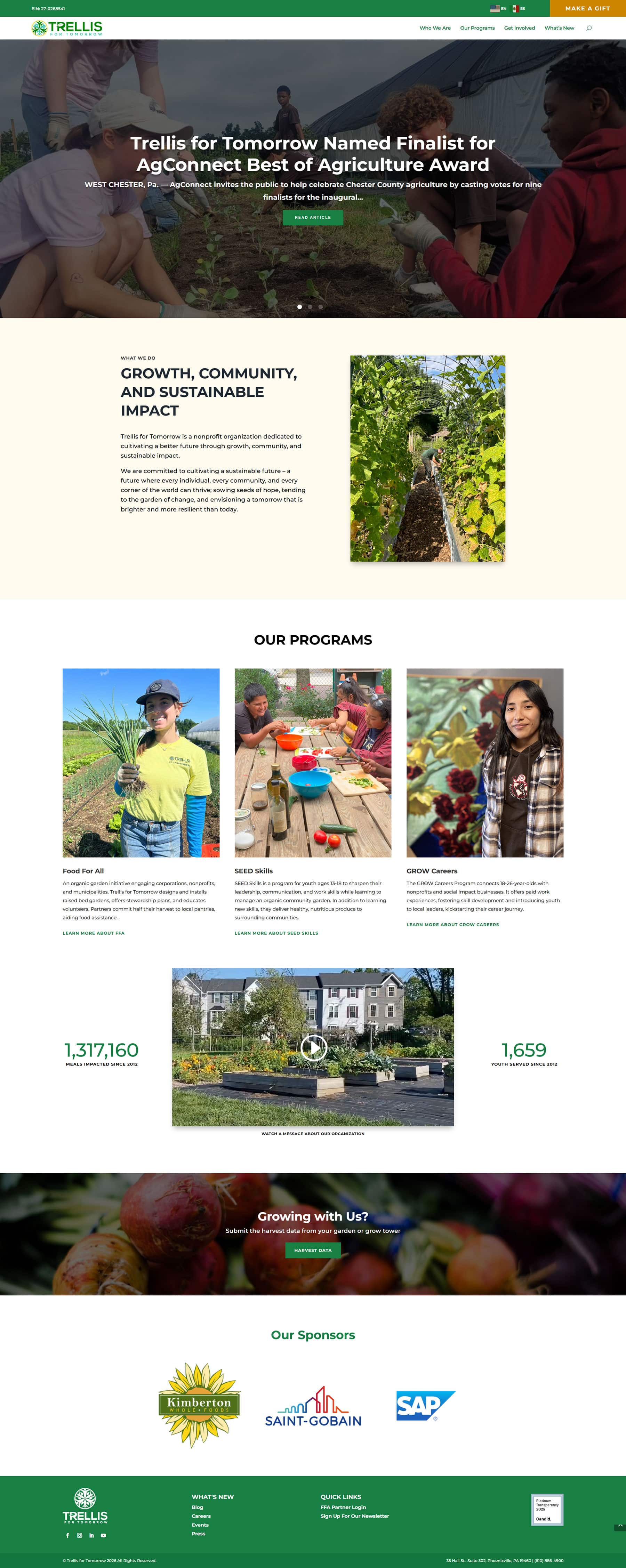
Ongoing Nonprofit Website Design, Development, and Maintenance
Trellis for Tomorrow is a Pennsylvania-based nonprofit cultivating a more sustainable future through youth development, community gardening, and food access programs across Chester and Montgomery Counties. Trellis came to me as a maintenance client with an existing Divi-based website and a growing list of programs, fundraising events, and partnerships that needed a digital home to keep pace. Over time, as well as providing routine maintenance the site evolved with most of the original site reimagined page by page as Trellis needed.
Project Overview:
The relationship started with keeping the site running, plugins updated, and content fresh. Slowly over time their pages were redesigned to better reflect the organization's voice and visual identity, new pages were built to support fundraising events and program launches, and a custom live harvest tracker was developed for the Food for All program. The result is a site that has matured alongside the organization and continues to grow with them.
Approach:
Because Trellis was already on Divi, I focused on evolving the site rather than tearing it down. Each page redesign improves on the last, with stronger visual hierarchy, more intentional photography, clearer calls to action, and a brand presence that feels consistent from the homepage to a single garden site detail page. Working in tandem with the Trellis team, I help shape the design so each program or event has the platform it needs without disrupting the rest of the site.
Key Features:
- Custom Live Harvest Tracker (Food for All): A custom-built tracking system on the Food for All page automatically calculates and displays current totals for pounds harvested and pounds donated across all FFA gardens, broken out between traditional raised beds and hydroponic grow towers. Garden partners submit their harvest data through a Gravity Forms submission, and the totals on the public page update automatically. This gives partners and the broader community a live, transparent view of the program's collective impact.
- Garden Sites Directory: A popup directory on the Food for All page showcases every FFA partner garden, with individual detail pages for each site that include partner-since dates, bed counts, and current-year harvest totals.
- Past Years Data Table: A clean year-over-year comparison table sits alongside the live tracker, archiving harvest and donation totals from prior seasons so the program's growth is easy to see at a glance.
- Program Pages: Dedicated, refreshed pages for each Trellis program (SEED Skills Crew, GROW Careers Crew, Trellis Alumni Project, Food for All, and the Ag Learning Center) give every initiative the space it needs to tell its story.
- Fundraising and Event Pages: Custom event pages support Trellis's annual fundraising calendar and special initiatives with consistent layouts that make new event launches faster and easier each year.
- Press and Newsletter Hubs: Dedicated Press, Blog, and Newsletter pages give Trellis a steady channel for news, grant announcements, and community updates.
- Get Involved Pathways: Clear, distinct pages for Make A Gift, Volunteer Opportunities, Career Opportunities, and Business Partnerships make it easy for every type of supporter to find their next step.
- Graphic Design Partnership: Beyond the website, I provide ongoing graphic design support for Trellis's print and digital materials.
Recognition From Other Clients:
One of the strongest signals of how this site has come together is that several of my subsequent clients have pointed to the Trellis for Tomorrow website during their own discovery conversations, calling out specific design elements they wanted to replicate. That kind of unprompted reference, from people who weren't involved in the project, is some of the best feedback a designer can get.
Outcome:
What started as a maintenance engagement has grown into one of my most rewarding long-term partnerships. The Trellis for Tomorrow website now reflects the depth and reach of the organization's work, supports ongoing fundraising and partner engagement, and delivers real-time program transparency through the custom Food for All tracker. The site continues to evolve as Trellis grows.
Conclusion:
The Trellis for Tomorrow project is a great example of what's possible when a nonprofit and a designer commit to a long-term partnership. Whether the work is a new event page, a custom feature for a flagship program, or a fresh look for an aging template, the goal is the same: keep the website serving the mission, and keep the mission visible to the community it supports.
For another example of my long-term work with mission-driven organizations, check out my case study on TriCounty Community Network. This project showcases my ability to support nonprofits with deep program catalogs and active community engagement.